SmartPlugs are an edge architecture choice, not a chassis replacement slogan.
After the SmartPlugs concept is clear, the practical question is where they belong. The answer is not "everywhere." SmartPlugs make the most sense when optical functions need to move closer to the switch or router, especially where rack space, power, cabling, and operational handoffs are under pressure.
Traditional optical chassis still have a strong role where scale, multi-degree switching, long-haul engineering, and centralized wavelength control matter more than compact deployment.
Where SmartPlugs Fit Best
SmartPlugs are best suited to deployments where compactness, host integration, and fast field rollout matter more than raw optical shelf scale.
01IPoDWDM edge
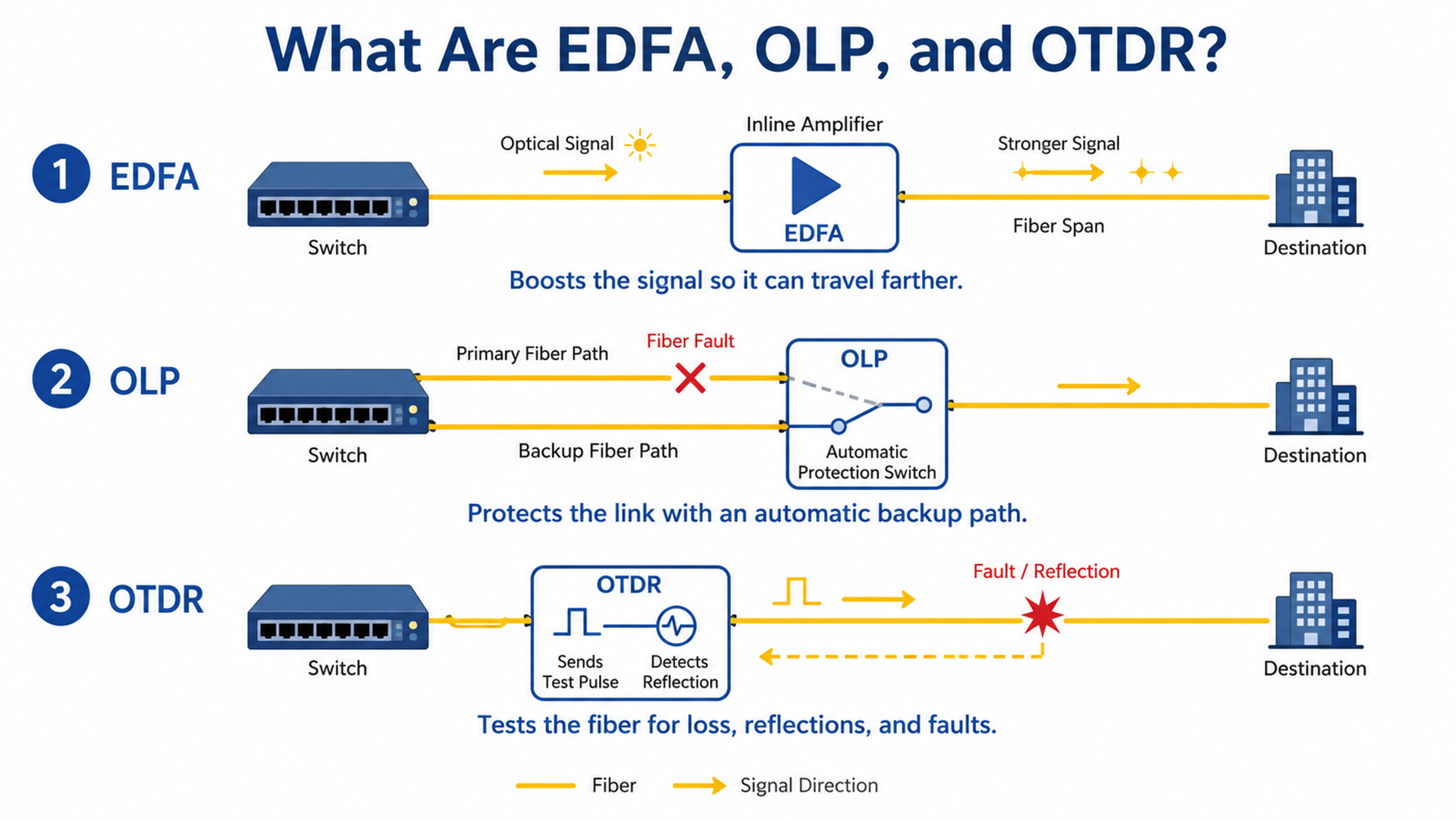
Useful when operators want optical reach, diagnostics, protection, or amplification closer to the router instead of in a separate shelf.
02Data center interconnect
A clean fit for compact, high-capacity links between sites where adding full optical shelves at every location is excessive.
03Whitebox and SONiC networks
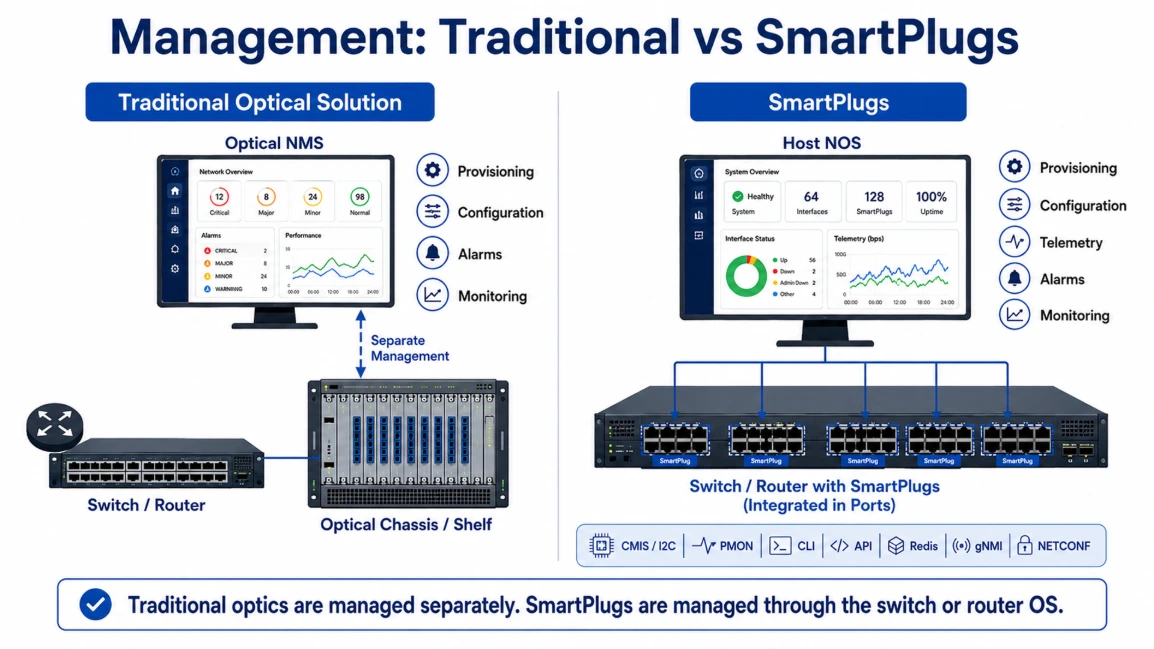
Provisioning, telemetry, and monitoring can align with the host NOS rather than a separate optical management environment.
04Metro and regional links
Reach extension, protection, and fault visibility can be added without turning a small edge site into a transport room.
05Protected optical paths
OLP, splitters, and couplers support resilient links while keeping the physical design compact and easier to service.
06Dense AI and cloud sites
Space- and power-sensitive environments benefit when optical functions avoid extra rack units, cabling, and power feeds.
Why Customers Care
The value is operational. SmartPlugs reduce the number of physical and management layers that teams need to deploy, cable, power, monitor, and troubleshoot at the edge.
SmartPlugs vs. Traditional Optical Chassis
The right answer depends on what the site needs to optimize. SmartPlugs simplify the optical edge. Chassis systems still carry the heavier optical engineering jobs.
The site needs compact optical intelligence near the host platform.
- IPoDWDM or DCI links need a smaller footprint.
- The network uses whitebox switching, SONiC, or open NOS workflows.
- Metro or regional sites need reach, visibility, or protection without a full shelf.
- Power, space, and cabling are limiting deployment speed.
- Optical management should align with the host platform.
The optical layer is large enough to justify dedicated transport control.
- Very high port density is required in one location.
- The design depends on large ROADM, CDC-F, or multi-degree switching.
- Long-haul or ultra-long-haul spans need full optical engineering control.
- Centralized wavelength management is required at carrier scale.
- Multiple spans and regeneration points must be engineered as one transport system.
Where They Sit in the Portfolio
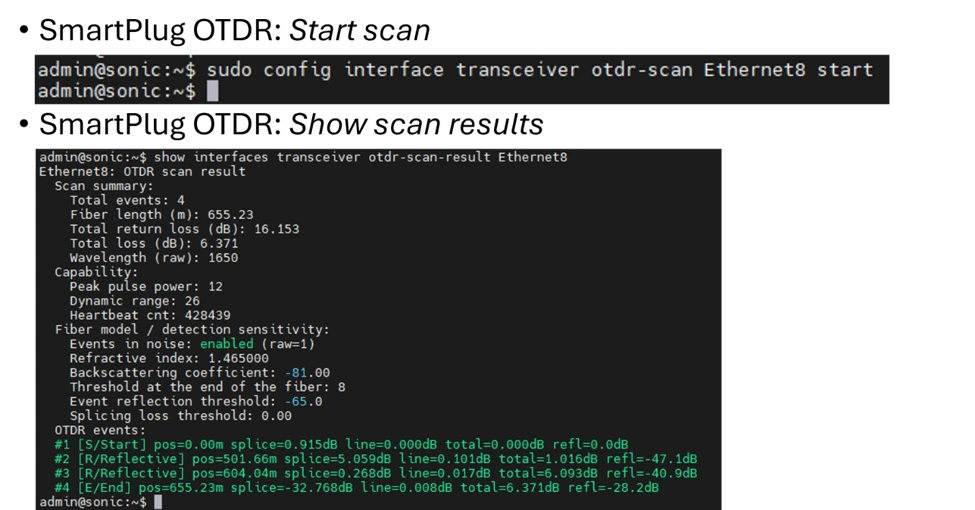
SmartPlugs work best as part of a compact transport toolkit, not as isolated pluggables. The architecture can include coherent optics, passive DWDM building blocks, QSFP-EDFA amplification, QSFP28 OTDR diagnostics, and OLP protection.
The strongest SmartPlugs use cases are not about replacing a chassis everywhere. They are about avoiding unnecessary chassis deployment where the optical requirement is local, compact, and operationally tied to the host platform.
Final Thought
The future of transport will not be one-size-fits-all. Some networks will continue to need large optical shelves and centralized control. Others will benefit from pushing optical intelligence closer to the switch or router.
Use SmartPlugs where the edge needs to get smaller, faster, and easier to operate. Use traditional chassis where scale and optical complexity demand a dedicated transport system.
Build Compact Optical Transport Networks
Reduce footprint, simplify operations, and improve optical visibility with integrated SmartPlugs Transport Solutions.
Contact Our Team