Start with
one connection.
A more open network can start with the equipment you already own.

Open networking does not have to begin with replacing a switch. A qualified third-party optic or cable lets you evaluate another supplier, test interoperability, and compare costs on a connection you already understand.
From there, you can separate more of the components traditionally bought as one vendor's system: hardware, the network operating system, optics, applications, and support. Each choice depends on qualifying the combination you plan to run.
Make the first connection a useful test.
Qualified third-party transceivers, direct-attach cables, and active optical cables can lower acquisition costs while keeping your switches and network software in place. Choose a representative link, define a rollback plan, and test more than whether it comes up.
Does it fit your environment?
Check the switch model, software release, module coding, fibre type, optical budget, and error correction requirements. Verify that the expected diagnostics are available.
Does it stay reliable?
Watch error counters, optical power, temperature, and stability under representative traffic. Recheck after a restart or a planned software change.
Can you rely on the supplier?
Establish who handles coding issues, replacements, and interoperability faults. Test the quality of the engineering response as well as the hardware.
Review the switch vendor's warranty and support terms, including any requirement to reproduce a fault with approved optics. Plan the escalation process before rolling out at scale.
Learn on the traffic you observe.
A disaggregated packet broker lets engineers work with independently selected hardware, software, and optics. PacketMaestro aggregates, filters, and distributes traffic from TAP and SPAN sources to monitoring and security tools on qualified open hardware.
from TAP / SPAN PacketMaestroAggregate, filter, distribute Monitoring toolsSecurity and performance
Start with a monitoring problem you need to solve. Configure the traffic feeds, verify what reaches each tool, and rehearse upgrades and faults. This gives the team practical experience with disaggregation before changing the production switching fabric.
Outside the forwarding path still means operational responsibility. A broker failure can leave monitoring blind. TAP installation needs planning, and inline deployments require a separate risk assessment.
Get comfortable with the everyday work.
A lab or staging environment is a useful place to introduce SONiC and qualified open switching hardware. A management network can also be suitable, provided you protect the access paths used to recover the rest of the network.
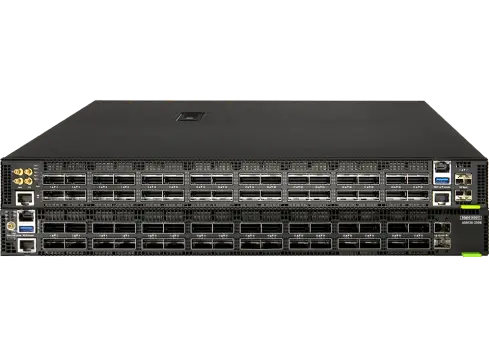
SONiC is not a single commercial package. Community releases and supported distributions differ in qualified hardware, features, release lifecycle, and support. ECIN's Ready-to-Plug switches combine qualified open hardware with a supported Broadcom SONiC distribution.
Before you depend on it
- Back up and restore configurations. Connect monitoring and automation.
- Rehearse an upgrade, a rollback, and the loss of management access.
- Walk through a fault with the support team and document who owns each part of the response.
Move into production when the evidence is there.
A new rack, a defined workload, or a scheduled refresh gives the deployment a manageable boundary. Use the experience from earlier work to decide whether the next move is justified.
- The platform fits the job.
- Validate routing, redundancy, telemetry, and any required EVPN/VXLAN features on the chosen hardware and release. Qualify the intended top-of-rack, leaf, or spine role.
- The team can recover it.
- Document the cutover, rollback, monitoring, and escalation procedures. Make sure the people operating the network have rehearsed them.
- The economics include the work.
- Account for training, integration, subscriptions, spares, software maintenance, and support. Hardware pricing alone is not the business case.
For AI infrastructure: GPU back-end fabrics are often delivered as validated systems. Consider a well-defined front-end, storage, management, or visibility requirement for a first deployment, and qualify it on its own terms.
Keep timing in the design
Consistent timestamps help correlate captures, logs, and events. Use NTP where it meets the application requirement, and evaluate PTP where tighter synchronization is needed. Hardware timestamping, switch capabilities, and software support vary. Check them during platform selection. Our timing architecture guide covers the complete path.
You decide how far to go.
Vendor dependency does not disappear. Qualified alternatives can make it possible to change one component without replacing the whole system.
Start with a connection you can validate. Let the result inform the next decision. That may lead to a broader open switching deployment, or simply a better way to source connectivity. Both are useful outcomes.
Open networking questions, answered
Do I need to replace my switches to get started?
No. A first deployment can use qualified third-party optics or cables in existing switches. Confirm compatibility with the exact platform and software release, then evaluate stability and support before expanding.
How much can third-party optics save?
Usually a substantial amount. ECIN optics typically cost 50% to 80% less than OEM-branded equivalents, and moving off OEM support contracts has reduced maintenance spend by up to 80%, as Bell Canada's vLab found across its transceiver fleet. Much of the OEM premium is commercial rather than technical, with optic margins approaching 90% in some segments.
Is out-of-band visibility risk-free?
No. The packet broker processes traffic copies outside the forwarding path, but a failure can interrupt monitoring or security analysis. Plan TAP installation, capacity, redundancy, and alarms around the visibility your operations depend on.
What should be proven before SONiC reaches production?
Validate the required features on a supported hardware and software combination. Rehearse upgrades, recovery, monitoring, and escalation. A lab or staging deployment should produce a tested operating procedure and a clear rollback plan.
Start Small Before You Scale
Begin with one connection, prove interoperability, gain hands-on experience with disaggregation, and expand into open switching only when the operational and economic case makes sense.
Contact our Team