As a network grows, so does the cost of getting the right traffic to the tools that need it.
Security, performance, packet-capture and analytics tools all depend on network visibility. The packet broker that feeds them brings its own hardware, licensing and support costs. In a proprietary appliance model, those decisions are often tied together.
PacketMaestro is an Open Packet Broker Network Operating System that runs on validated open-networking hardware. Separating the software from the platform gives network teams more choice in how they deploy, expand and refresh their visibility infrastructure. ECIN modeled what that flexibility can mean for total cost of ownership.
The comparison, with its limits.
ECIN compared PacketMaestro with selected leading packet-broker platforms in comparable 25G and 100G configurations. The table shows the modeled TCO savings over each ownership period.
| Deployment comparison | 3-year savings | 5-year savings |
|---|---|---|
| Comparable 25G/100G deployments | Up to approximately52% | Up to approximately52% |
| Selected high-density 100G platforms | Approximately18–39% | Approximately24–39% |
These are planning benchmarks, not guaranteed customer savings. Results depend on configuration, licensing, support levels, discounts and hardware reuse. Where equivalent competitor support pricing was unavailable, ECIN used comparable support-rate assumptions. Read the methodology.
Give hardware and software room to evolve.
A visibility platform should fit the network you operate today and leave a practical path for growth. With PacketMaestro, hardware selection and packet-broker software can be evaluated separately.
Choose for port density, interface speed and lifecycle requirements.
Explore PacketMaestro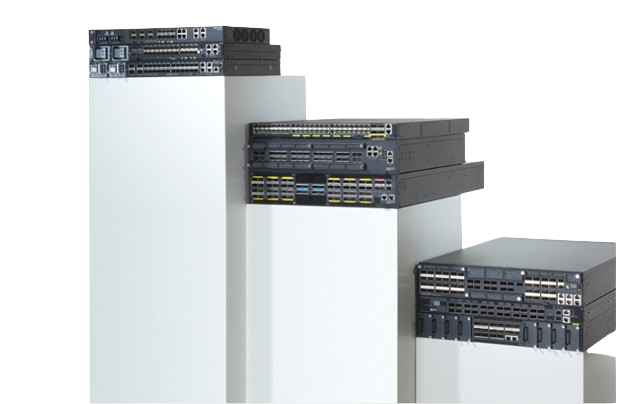
- Choose the platform
- Validated open-networking hardware gives teams an alternative to a proprietary packet-broker appliance. Compare switching capacity, port density, availability and lifecycle support alongside the software requirements.
- Plan the expansion
- Match the initial configuration to actual requirements. As traffic grows, assess the supported capacity and licensing options before replacing a platform. Expansion depends on the hardware and configuration; it is not automatically a software-only change.
- Assess what can stay
- Existing compatible packet-broker or open-networking hardware may offer a reuse opportunity. Check the exact model and required capabilities with ECIN before treating that hardware as part of a migration plan.
The cost of a packet does not end at the broker.
Monitoring tools also consume capacity. Security, network detection and response, packet-capture and application-performance tools are often sized or licensed by throughput and processing requirements.
Replicate · Load balance
PacketMaestro can aggregate, filter, replicate and load balance traffic before it reaches those tools. A capture system, for example, can receive the traffic selected for recording while a security tool receives the feeds its analysis requires.
This can help teams use existing monitoring capacity more effectively and potentially defer an upgrade. Assess that benefit separately: the comparison above does not establish a quantified saving for your monitoring tools.
Compare the years of ownership, not just the order.
A meaningful comparison uses the same traffic requirements, features and service expectations on both sides. Then it follows the costs through the life of the deployment.
At deployment
Include hardware, software, port and feature licensing. Confirm which interfaces and capabilities are available in the proposed configuration.
During operation
Align support coverage and maintenance assumptions. Review how the traffic delivered to monitoring tools affects their capacity requirements.
As requirements change
Account for expansion, hardware refresh cycles and any validated reuse. Compare the same growth plan over both ownership periods.
The useful outcome is a visibility architecture that stays economical as requirements change, with the assumptions clear enough to revisit at renewal.
Take a closer look at the analysis.
The PacketMaestro Open Packet Broker TCO White Paper covers the ownership-period comparisons, high-density platforms, hardware reuse, monitoring-tool economics and modeling assumptions.
Download the TCO white paperMethodology note
Savings percentages are based on ECIN comparison models using available public competitor pricing, historical pricing information and available support data. Where equivalent competitor support pricing was unavailable, comparable support-rate assumptions were applied. Results are planning benchmarks, not guaranteed customer savings. A deployment-specific comparison should validate the configuration, current commercial terms and growth assumptions.
PacketMaestro TCO, answered
Will every deployment achieve the headline saving?
No. It is an upper result from selected ECIN comparison models, not a guaranteed reduction. Hardware, licensing, support terms, discounts, growth and compatible hardware reuse all affect the result.
Why compare three-year and five-year ownership?
Support, licensing, expansion and refresh costs can change the comparison over time. Looking at both periods helps a team evaluate the proposal against its expected operating life, rather than the initial purchase alone.
Can I keep hardware I already own?
Possibly. The exact platform must be validated for PacketMaestro and support the interfaces, capacity and features you need. ECIN can assess compatibility before proposing a migration or including reuse in a TCO comparison.
Can it help us get more from existing monitoring tools?
Filtering can keep unnecessary traffic away from a tool, while load balancing can distribute traffic across available capacity. The benefit depends on your traffic, tool requirements and configuration. It needs its own assessment and is not a guaranteed reduction in tool licensing.
How were competitor support costs handled?
ECIN used available support information. Where equivalent competitor support pricing was unavailable, the models used comparable support-rate assumptions. Those assumptions should be checked against current quotes before making a purchase decision.
What is needed for a custom TCO comparison?
Start with port speeds and quantities, traffic volumes, required features, support expectations and growth plans. Include details of hardware you hope to reuse. An existing quote or renewal proposal can help ECIN establish a comparable baseline.
Build a comparison for your network.
Contact E.C.I. NETWORKS INC. to evaluate PacketMaestro against your port requirements, existing infrastructure, support model and growth plans.
Request a Custom TCO Comparison